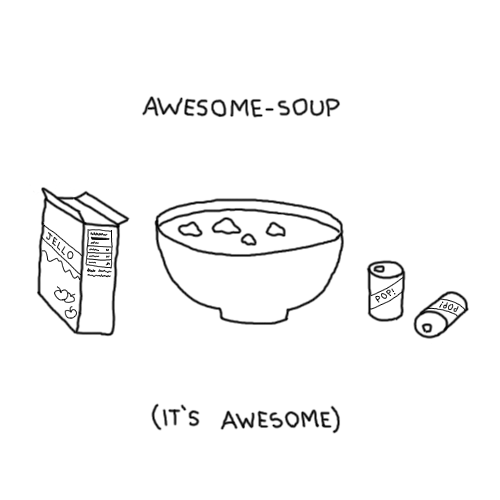
 Tonight I wasted an hour of my life I will never get back. Ever. While I haven’t take to ripping a brand to shreds with clever phrasing and witty banter for awhile, this event made me feel it was time for comeback. You might sitting in front of your 13/15/17in mac screens ( not a mac user? shame.) asking, “what travesty could drive her to bring angry Anna out of retirement?” Let me tell you. It’s starts and ends with hot soup.
A few weeks ago an eager beaver member of my team found a blogger event posted on the Virgin blog. Being the curious boss I am I thought it was a great idea for my team to attend a brand-run blogger event as a outsider. So we all clickity-clacked and submitted ourselves as potential attendees. The website specified it was “special event” that “Richard Branson maybe present” and that attendees would be “specially ” selected. Was I crazy to assume that this was going to be something pretty cool? I ask you, if you read this, would you think “time-waster” or “mega-awesome-fun-time”? For the sake of the this blog post I am going to assume option B.
Last week my team and I received an excited email from the VirginMoney team announcing that we had been selected to attend mega-awesome-fun-time. The email again stressed secrecy about the event, flaunted Mr Branson’s attendance, and hinted at a special outdoor occurrence. To put the proverbial icing on the mega-awesome-fun-time cake, it was all to be accompanied by some hot soup. I found the mention of hot soup so intriguing that every time I talked about the event at work , on Twitter, and via Facebook the conversation would always end with HOT SOUP. Always in caps. I do not f*ck around when it comes to soup. Hell my calendar reminder was earmarked “HOT SOUP with RB and the Gang.” Note how HOT SOUP led the pack in that messaging. So it with eager eyes and a soup-hungry heart I headed to the Virgin Money event this evening.
Now soup jokes aside, I was actually quite interested in hearing more about Virgin Money. As a some one who knows a little about financial services, I wanted to see how Virgin plans on revolutionizing banking for the consumer. I checked their website and found it woefully light in actual change points. Now silly little Anna (that’s me) thought that maybe it would be at this event that Mr.Branson would boldly reveal about just how his company planned to take on high street banks. My mental imagery prepared me for a show something like Mr. Branson wielding a sword, surrounded by the remaining Occupy Londoners , with eye of the tiger blaring in the background as he delivered the VirginMoney battle cry. Yes, I was expecting VirginMoney to cut a bitch, more specifically I expected to walk away knowing just who VirginMoney was. Boy, was I wrong.
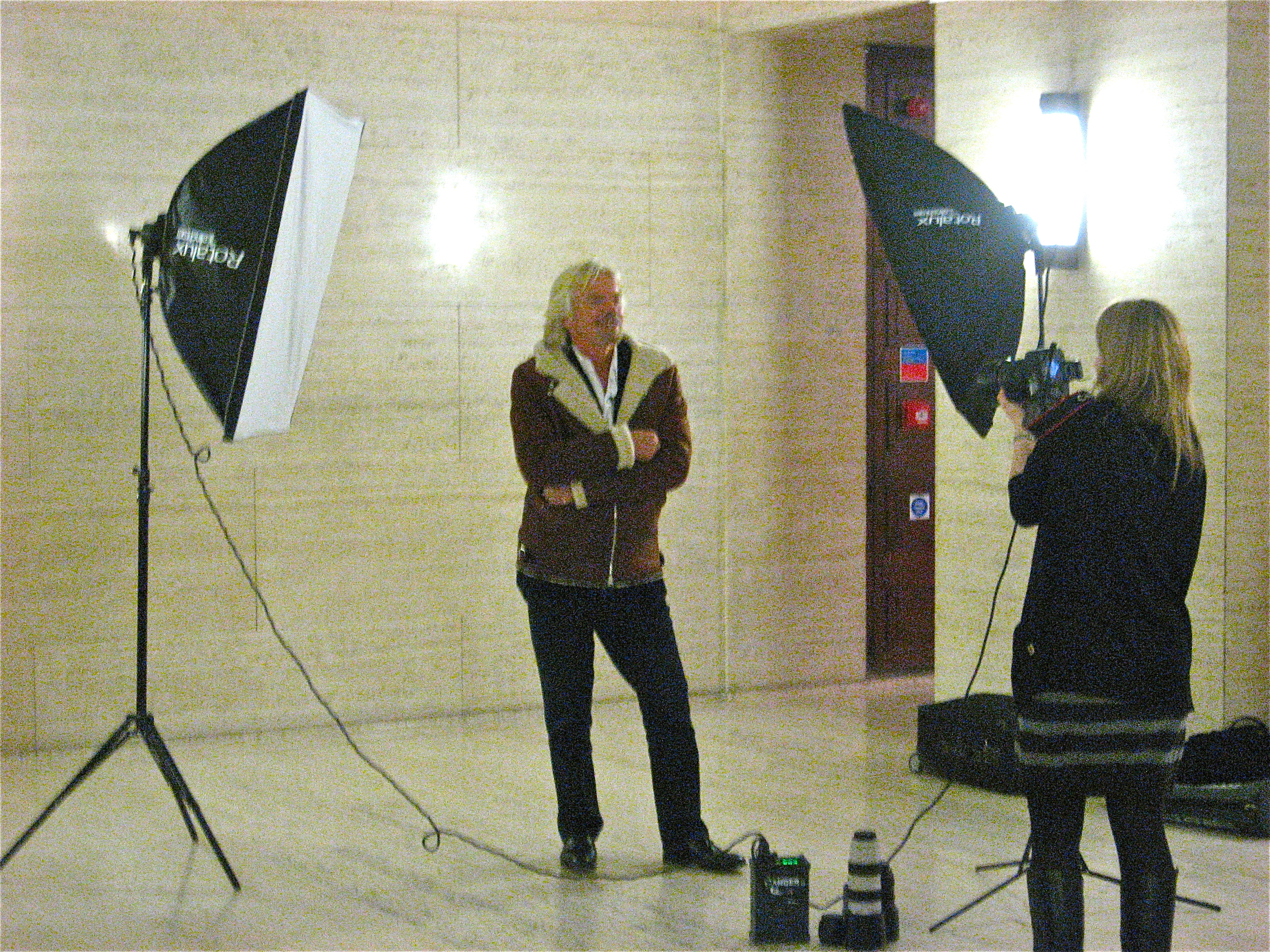
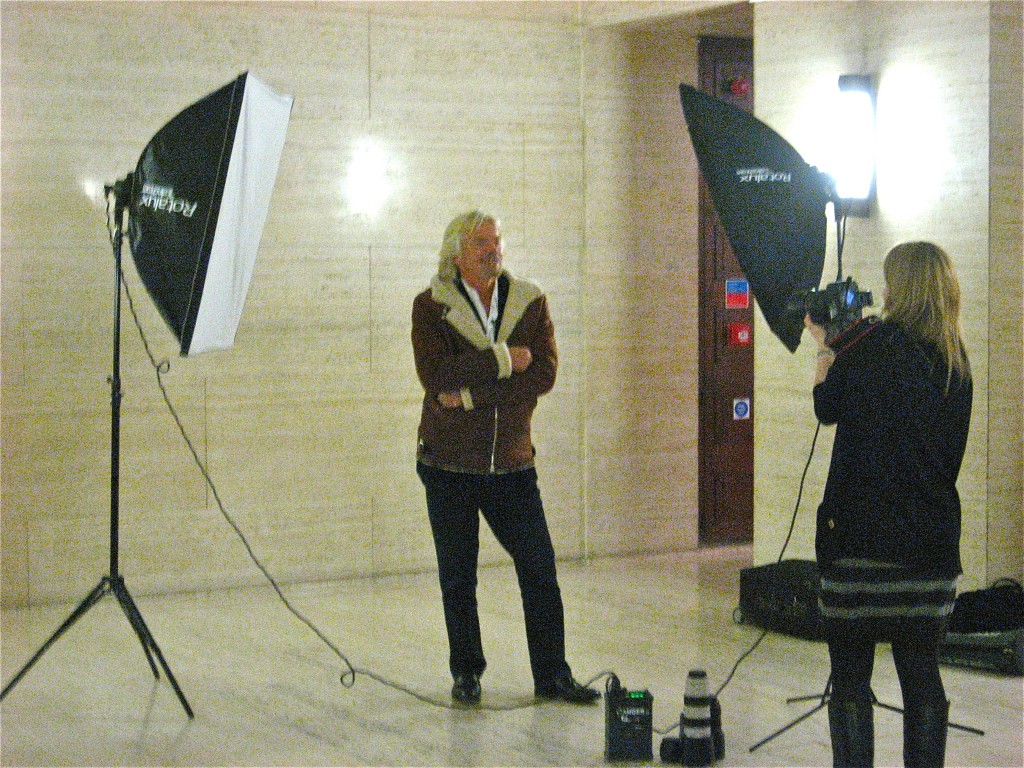
I arrived onto time to a small reception area that was barren. The hot soup was there as promised, but eagerly awaiting brandishing and large feline festivities I did not grab any as I needed to keep my hands free and nimble for catching it all live. Looking to my left I saw Mr. Branson begin an awkward photo shoot. This made me come to the life realization that no one looks cool giving a double thumbs up to the camera. No. One. Soon the hall was flooded by every other attendee and people began taking pictures of people taking pictures of Branson. As a some sort of photographic counter-attack, Branson’s people began taking pictures of people taking pictures of people taking pictures of Branson. It was all very meta.
 Soon Branson was on the move, and to my surprise- he was coming my direction! I did one of those awesome movie moves, where you just stand in one place trying not to be awkward, but you are extremely awkward because you’re standing in one place not moving and nobody really does this. It was pretty awesome, until team Branson accidentally bumped into me on their way out. His short-haired PR lady proceeded to give me the British stink eye (like the American stink eye but with a posher accent and socialist tendencies) and barked “excuse me miss” in my face. In case you are wondering, she didn’t really want me to excuse her. She was doing that “I am going to say something nice in the rudest, evilest way possible. I will also smile at the end, maybe even wink just to show you how much I am messing with your tiny not PR awesome mind” thing. I hate that thing.
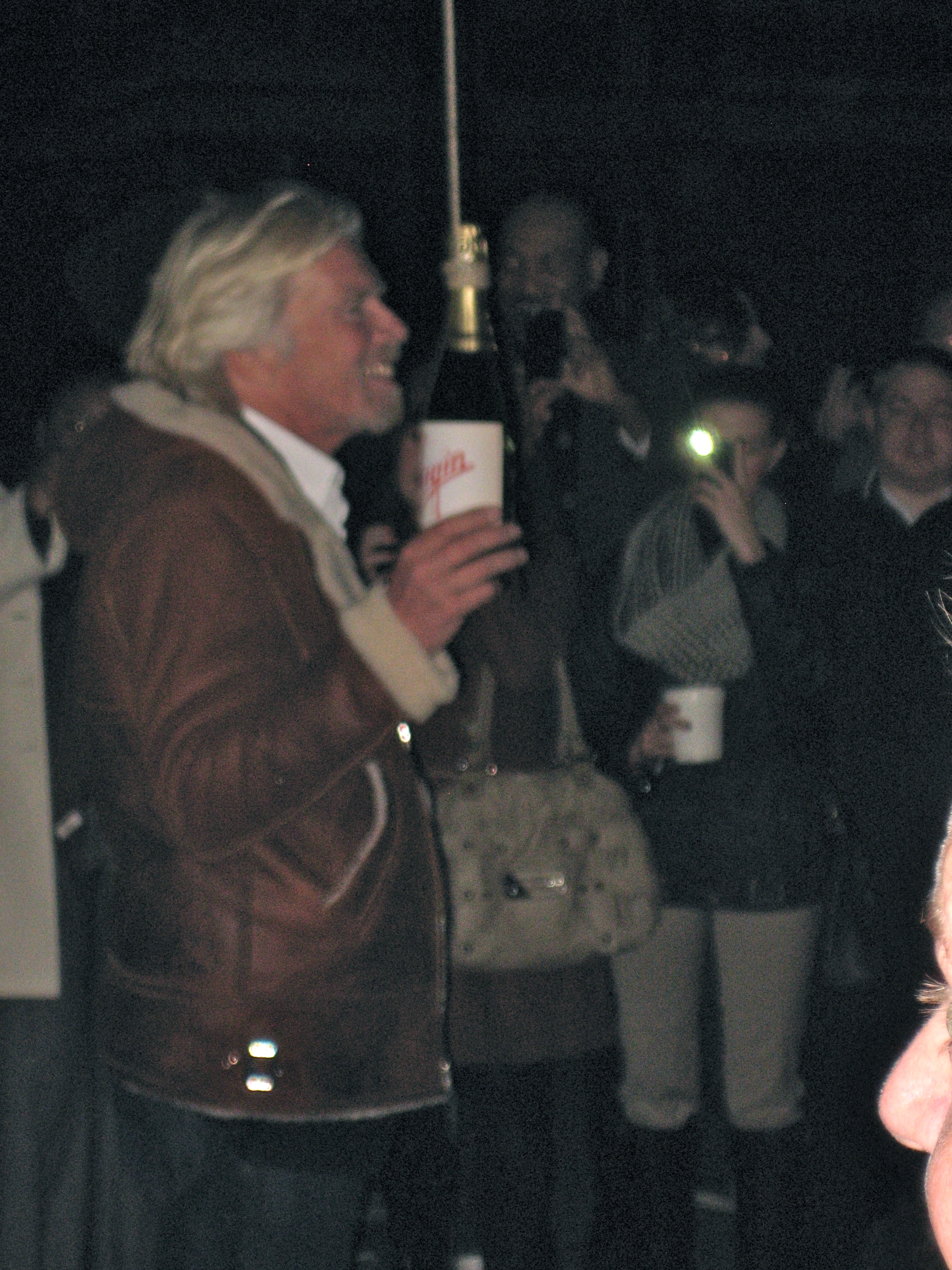
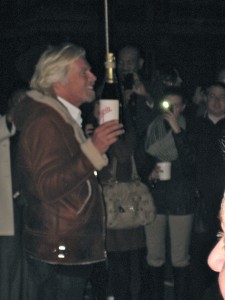 Myself and the other sheep were herded out to the main courtyard in-front of the senate building to see the mighty Branson holding not a sheath, but a bottle of champagne. I must note that I would totally have been okay if Brandson decided to announce VirginMoney rap video style. Alas there were no sexy dancers or panthers on chains to be seen anywhere. Closer up I realized the champagne was on a string… I still don’t fully understand why. Maybe Branson is a hands free type of drinker; maybe that’s what you get to do when you are rich. We were told to turn around and look at the building. Then it started.
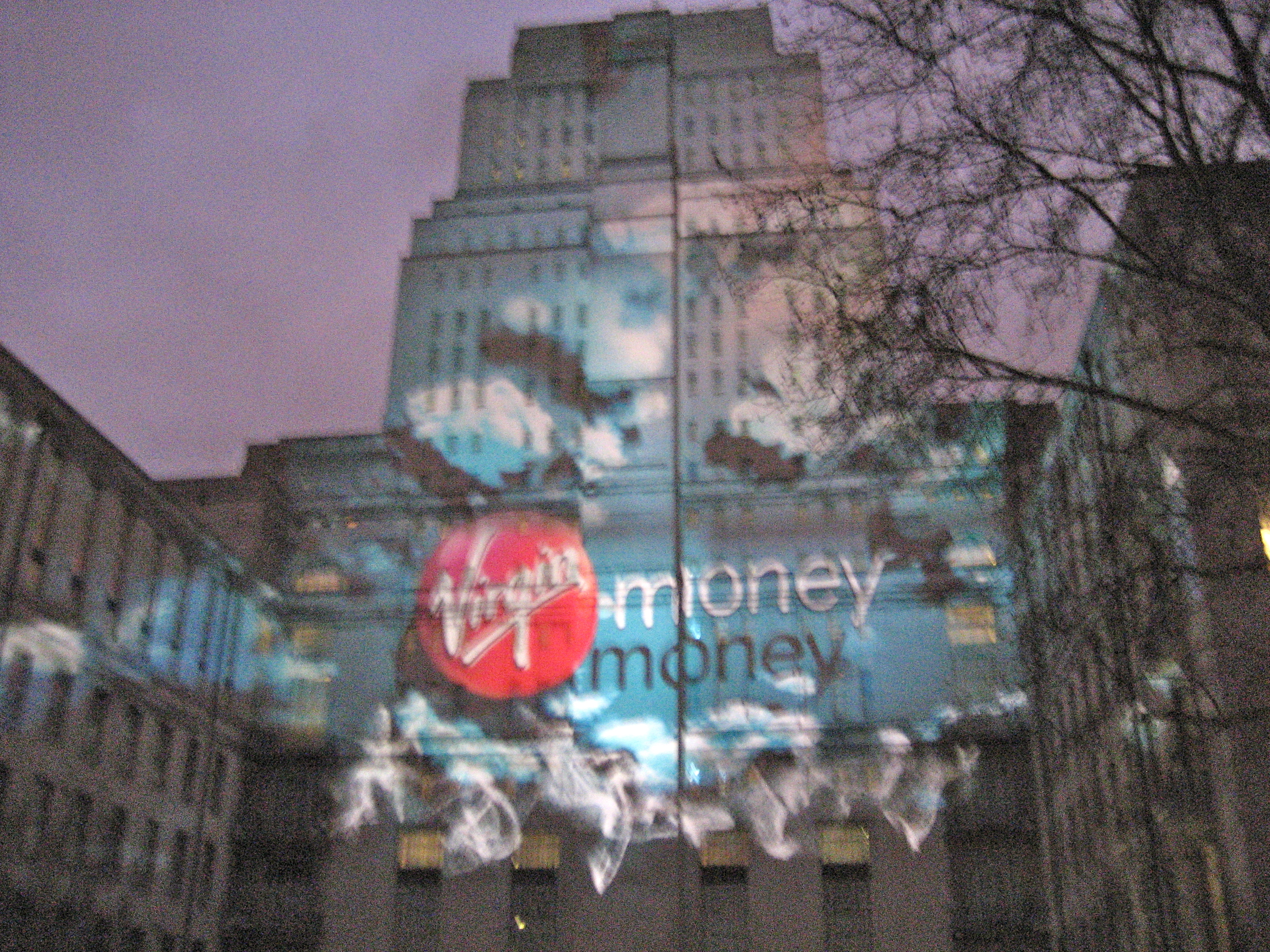
What is “it” exactly? Well, if you paid attention to the @richardbranson twitter handle you likely saw this tweet showcasing the new VirginMoney advert. Now imagine seeing that 3D on a building. Also imagine people looking really confused because there was no tip off that it had started. It’s like being at a party and your jam playing in the background but not realizing it until the chorus. By the time you get into the groove, it’s too late.They showed it twice in a row as a result. Yay! Even more time wasted! I admit, it would have been kind of cool if I hadn’t taken off work, hauled myself across town, and been hyped up for a mega-ultra-fun-time with RB- Virgin’s hottest celebrity. I can testify (testify!) that if you were expecting said “mega-ultra-fun-time” you’d be pretty disappointed to see an ad you’d already discovered via twitter played on a building. To passersbys? Yeah, it was probably pretty damn cool. Le sigh.
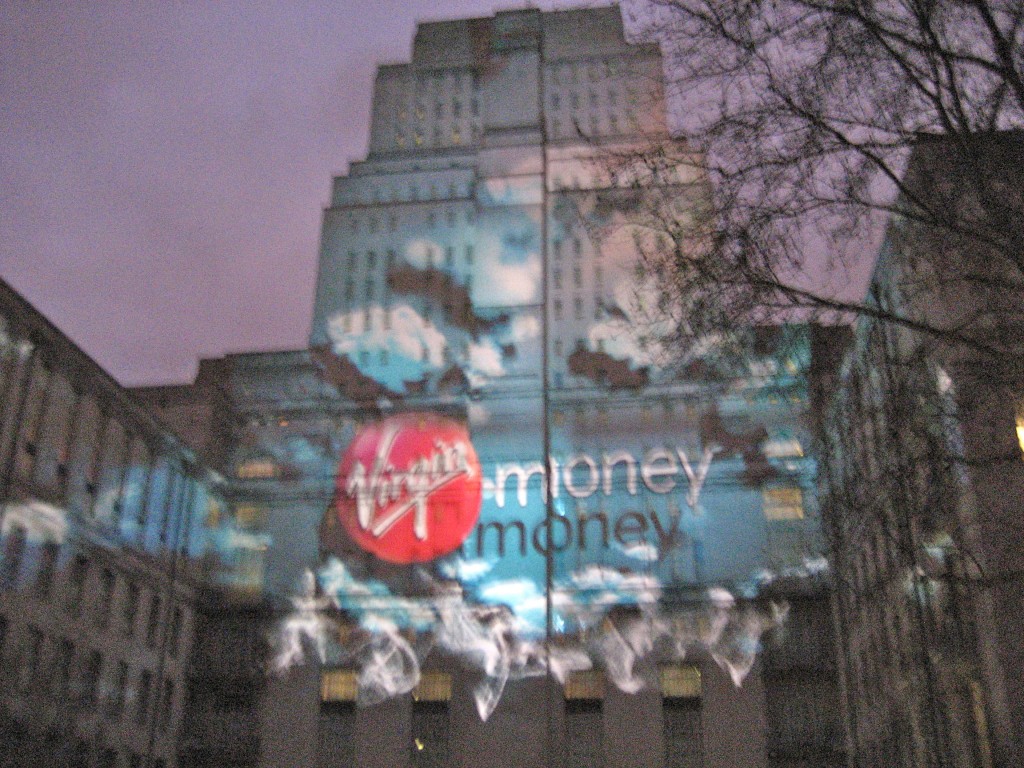 Soon after the video ended and Mr. Branson was ripped away from the crowd after delivering a barely audible speech. This couldn’t be the end of the event. Where was the battle cry? Where were the exotic animals? Where the explanation of exactly how VirginMonday would be any different then the high street banks? Where was my pamphlet of info? My free pen? Bumper sticker? As I sat there dumbfounded that this was the whole event and that it had been overhyped, I began to stew. Perhaps you, my much loved reader, feels I should have been grateful just to have been invited. I get that. However, you should know why this personally pisses me off so much. VirginMoney slams high street banks again and again about shitty practices and over promising. My first taste of their brand is that they do exactly what they accuse other banks of doing- making promises they can’t keep and not keeping the customer at the heart of their actions. I call shenanigans!
So angry-heartbroken Anna OBrien hung her head and coughed ( I do have a cold after all). Until I remembered the soup. At least, I could get some damn soup. So with a returned spring in my step I skipped back into the building to soupify my life, upgraded my tummy contents, liquify my hunger pains, and stew away the frustration. With each little step the voice in my head chanted a little louder.. soup. Soup. SOUP. SOOOOUUUP. I was having a Snoopy at suppertime type of moment. There was a sweet corn soup I had been eyeing earlier… it would be mine! Arriving into the snack hall my eyes recoiled and I feel myself fall to the floor ( figuratively); THERE WAS NO MORE SOUP.
Morals of this story:
- Make sure your blogger event doesn’t suck before over-hyping it and more importantly before inviting me.
- Make sure I actually learn something about your brand at your event otherwise it’s a waste of time and money for the both of us.
- If you say you’ll have soup, you damn well better have soup.

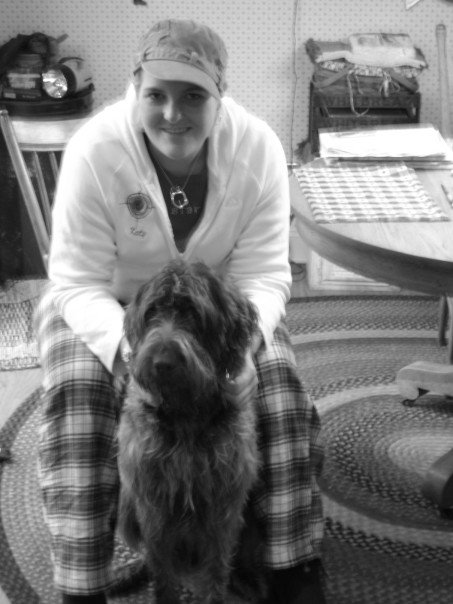 This is the blog post I have struggled to write for the past 6 months. I am uncertain why siting here in the Chicago airport, with little more than 3 hours of sleep under my belt, that I am up to the task. Further proof that life is a complicated and unexplainable series of choices and occurrences. Either way, today is the day I introduce you to my sister Katy- or Kat as she like to be called.